5.0
Reviewed May 22, 2018Brilliant course. High quality information, comprehensive bibliography and interesting tests. Visionary, complex and controversial. Not to be missed if you are interested in China.

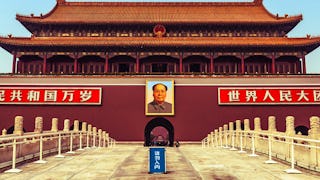
The purpose of this course is to summarize new directions in Chinese history and social science produced by the creation and analysis of big historical datasets based on newly opened Chinese archival holdings, and to organize this knowledge in a framework that encourages learning about China in comparative perspective. Our course demonstrates how a new scholarship of discovery is redefining what is singular about modern China and modern Chinese history. Current understandings of human history and social theory are based largely on Western experience or on non-Western experience seen through a Western lens. This course offers alternative perspectives derived from Chinese experience over the last three centuries. We present specific case studies of this new scholarship of discovery divided into two stand-alone parts, which means that students can take any part without prior or subsequent attendance of the other part. Part 1 (https://www.coursera.org/learn/understanding-china-history-part-1) focuses on comparative inequality and opportunity and addresses two related questions ‘Who rises to the top?’ and ‘Who gets what?’. Part 2 (this course) turns to an arguably even more important question ‘Who are we?’ as seen through the framework of comparative population behavior - mortality, marriage, and reproduction – and their interaction with economic conditions and human values. We do so because mortality and reproduction are fundamental and universal, because they differ historically just as radically between China and the West as patterns of inequality and opportunity, and because these differences demonstrate the mutability of human behavior and values. Course Overview video: https://youtu.be/dzUPRyJ4ETk
Brilliant course. High quality information, comprehensive bibliography and interesting tests. Visionary, complex and controversial. Not to be missed if you are interested in China.
Showing: 16 of 16
Very interesting evidence-based approach in delivering insights on Chinese society and its development. As a native Chinese, I still learned a lot about the societal characteristics of my home country.
This course was very well put together and expanded my knowledge of both Chinese and non-Chinese society elements. It was also an excellent example of a productive use of data from widely varying sources and what can be learned from carefully analyzing it.
Brilliant course. High quality information, comprehensive bibliography and interesting tests. Visionary, complex and controversial. Not to be missed if you are interested in China.
This was a very interesting course that helped me learn a lot of things about China's population. I was very surprised several times.
NICE COURSE WITH SOME INTERESTING INFORMATION. THANKS FOR ORGANIZING THIS COURSE.
thoroughyly enjoyable and enlightening course.
Awesome Experience
Great Course
It's great!
Thanks!
nice
I like part one better. a lot more information.
An excellent follow-up to the first course.
good info based on actual statistics.
Very interesting! Valuable!
Three and a half stars. It's an interesting overview of a very specific sub-topic within Chinese history--kinship and reproduction. I appreciated the short length and lecture + quiz format of the course, but I found the lecture videos (with the professors more or less reading the slides) a bit distracting, especially when words were mispronounced or mis-read entirely. Also found the focus on "who we are" a bit confusing; perhaps it's directed at those of Chinese ancestry? Would be a good course for students with a background in Chinese history or population/reproduction studies, but probably too specialized for general knowledge.